2ACDAssociation Action Citoyenne pour le Développement

Association Action Citoyenne pour le Développement — 2ACD

Association Action Citoyenne pour le Développement

The power of ideas for meaningful action

A young Malian civic association for development: concrete action, documented results, and partnerships built with communities.

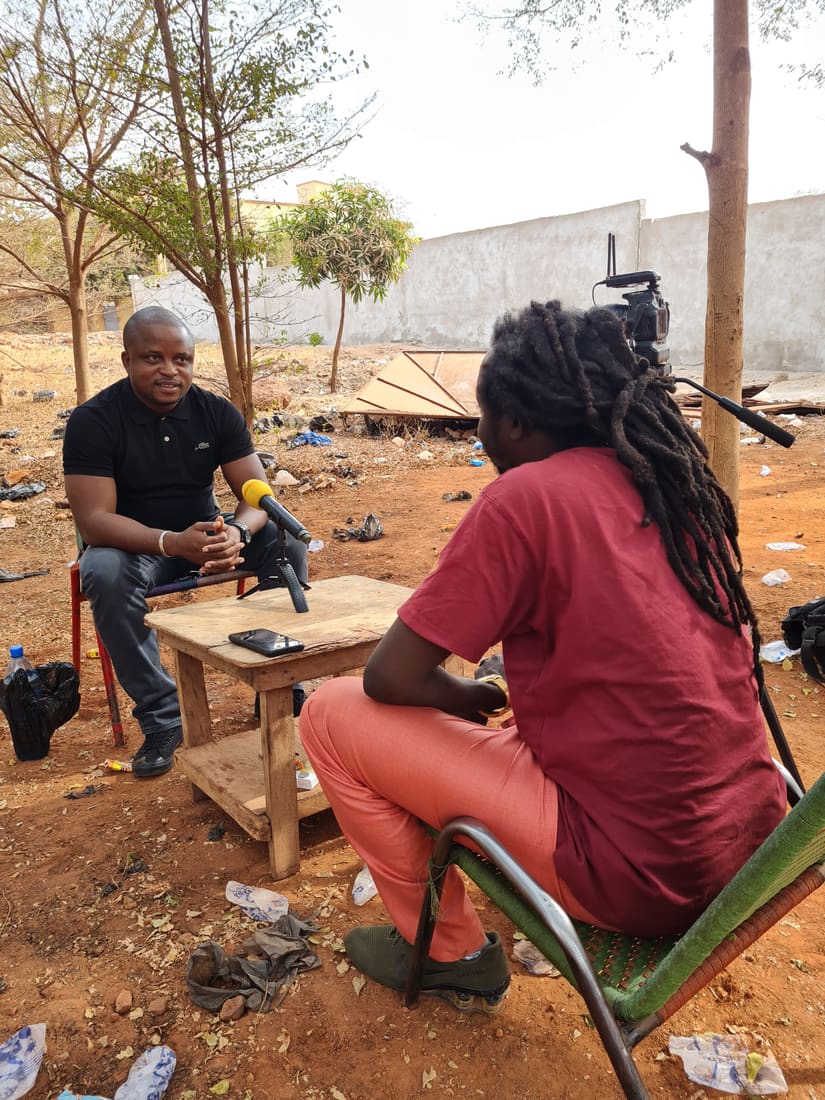
Field interview with a 2ACD representative in Mali

Institutional field exchange — documentary photograph.

Overview

Association Action Citoyenne pour le Développement (2ACD) is a Malian association created in 2025.

Its official recognition rests on the statutes, the declaration and the receipt issued in July 2025 (receipt N° 103/CKTI). The association works for community-centred, sustainable development in Mali.

2ACD designs and delivers initiatives with communities, strengthens local capacities and builds responsible partnerships with public institutions, technical partners and funders.

Message from the President

Dear partners, members and friends of 2ACD,

Mali and, more broadly, communities across the Sahel face deeply interconnected challenges: food security, climate change, access to essential services, socio-economic inclusion of young people and women, health, risky migration, peace and social cohesion.

It is in this context that Association Action Citoyenne pour le Développement (2ACD) was founded in 2025, driven by a strong conviction: lasting responses cannot be built without communities themselves — without valuing their capacities, knowledge and participation in decisions that shape their future.

Although our association is recent, it draws on women and men whose professional, civic and technical paths predate its creation. 2ACD intends to build on that experience and to mobilise, according to the needs of each intervention, complementary skills in project management, rural development, health, training, community support and socio-economic development.

This distinction matters: 2ACD’s institutional youth does not erase the experience of those who carry it. It does, however, place a higher duty on us: to demonstrate credibility progressively through the quality of our actions, the transparency of our management, the strength of our partnerships and documented results.

Our ambition is to contribute to inclusive and sustainable development across five complementary areas: agriculture and food security; environment and climate resilience; health and social protection; socio-economic inclusion of young people and women; and citizenship, peace and social cohesion.

Since our creation, we have begun to turn this vision into concrete action. Our first achievements include an initiative mobilising community pharmacies in the HIV response in Mali, as well as youth training and capacity strengthening, combined with access to computer equipment obtained with partner support.

These first experiences are not an end point for us, but the foundations of an organisation that seeks to learn, document, account for its work and improve.

We are convinced that a development organisation is not built alone. Complementary skills, knowledge of local realities and the ability to forge solid partnerships are essential to turn ambition into lasting results.

That is why 2ACD wishes to build collaborations grounded in trust, transparency, accountability and complementarity with communities, public authorities, local governments, civil-society organisations, national and international NGOs, cooperation institutions, foundations, research actors, companies engaged in corporate social responsibility, and technical and financial partners.

Our ambition is not to claim that we can meet every challenge alone. It is to become, step by step, a credible and structured local partner able to connect community needs with the skills, innovations and resources required to build lasting solutions.

We also want transparency and accountability to be part of our institutional development: clearly distinguishing completed achievements from projects in preparation, documenting results, capitalising on lessons learned, and making useful information available to partners and communities as it is validated.

To all those — communities, institutions, NGOs, foundations, companies, philanthropists and technical and financial partners — who share this vision, we extend an invitation: let us build together useful, demanding and lasting partnerships that can turn local initiatives into concrete development opportunities.

Mission

The mission of 2ACD is to mobilise citizens, skills and partnerships to develop concrete solutions for sustainable development — with particular attention to young people, women and vulnerable communities.

We favour interventions that can be measured, capitalised and, where relevant, scaled with local ownership.

Vision

Build resilient communities in which citizens, young people and women take an active part in development pathways that are fair, sustainable and locally owned.

Our approach

Our method is community-based, partnership-driven and results-oriented. Each intervention follows a clear sequence from listening to capitalisation.

  1. Listen to territories and stakeholders
  2. Design with communities
  3. Mobilise skills and partnerships
  4. Act on the ground
  5. Measure results
  6. Capitalise and share lessons

Values

These values guide our decisions, our partnerships and the way we account for our work.

  • Citizenship

    Place communities and civic engagement at the centre of development action.

  • Integrity

    Act with honesty, consistency and respect for our institutional commitments.

  • Solidarity

    Stand with people and groups facing vulnerability, without paternalism.

  • Inclusion

    Open participation to young people, women and groups often left at the margins.

  • Useful innovation

    Adopt tools and methods that serve real needs — not novelty for its own sake.

  • Responsibility

    Assume the consequences of our choices for people, partners and territories.

  • Transparency

    Publish verified information and clearly separate facts from work still to document.

  • Sustainability

    Prefer durable, locally owned outcomes over short-lived visibility.

Governance

Founded in 2025, 2ACD relies on the bodies defined in its statutes. Named office-holders are published following documentary validation. Its leaders and board members bring complementary professional experience across several development sectors.

  • General Assembly

    Supreme body of the association.

  • Board of Directors

    Strategic orientation and oversight.

  • Coordination unit

    Day-to-day operational coordination.

  • Technical commissions

    Thematic expertise in support of programmes.

  • Grassroots cells

    Local anchorage and community mobilisation.

Governance — people

Office-holders and board members of 2ACD, published following documentary validation.

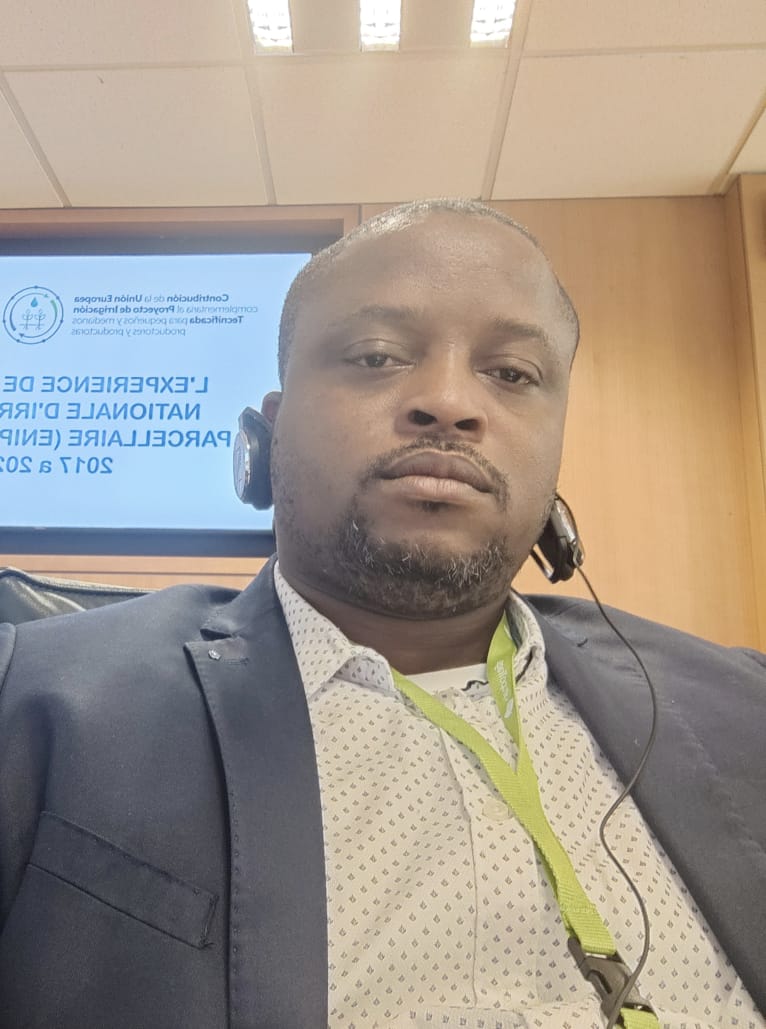
Dr Mahamadou Dabou Traoré, President of 2ACD

Dr Mahamadou Dabou Traoré

President of 2ACD

  • Doctor of Pharmacy · Master’s in Organisational Management
  • Over 15 years of experience (rural development, food security, public health)
  • Project management and coordination · West Africa · international organisations

Professional experience predates the creation of 2ACD (2025) — distinct from the association’s institutional age.

Dr Oumar Sy, Honorary President of 2ACD

Dr Oumar Sy

Honorary President

Mr Issa ONGOIBA, Permanent Secretary of 2ACD

M. Issa ONGOIBA

Permanent Secretary

Geographer and spatial planner · GIS and telecom networks · GIS and IT trainer.

Board of Directors

  • Mr Osias KEBBA MAHOULI, Board member

    M. Osias KEBBA MAHOULI

    Board member

    Economist · administrative and financial manager.

  • Mr Najim Ibrahim, Board member

    M. Najim Ibrahim

    Board member

    Master’s in law · technical adviser (international cooperation).

  • Mr Moussa Diarra, Board member

    M. Moussa Diarra

    Board member

    Environment management · agroecology and agroforestry.

  • Ms Niono Sira Coulibaly, Board member

    Mme Niono Sira Coulibaly

    Board member

    Nutrition / agri-food engineer · social security inspector.

  • Ms Coulibaly Fatoumata Karaba TRAORE, Board member

    Mme Coulibaly Fatoumata Karaba TRAORE

    Board member

    Master’s in marketing · customer experience (financial institution).

  • Dr Amadou Dolo, Board member

    Dr Amadou Dolo

    Board member

    Physician specialised in occupational medicine.

  • Mr Souleymane Nianti Traoré, Board member

    M. Souleymane Nianti Traoré

    Board member

    Lawyer and human resources manager.

Complementary skills

Founded in 2025, 2ACD draws on leaders and board members with complementary professional backgrounds.

  • Health / pharmacy
  • Development / management
  • Economics / finance
  • Law / HR
  • Environment / agroecology
  • Nutrition / agri-food
  • Marketing / customer experience
  • GIS / IT / telecoms
  • International cooperation

History

2ACD is a young organisation. Its institutional trajectory begins with formal creation in 2025, followed by early partnerships and documented delivery.

Institutional timeline

  1. 2025Creation and official recognition of 2ACD (statutes, declaration and receipt, July 2025).
  2. 2025Institutional structuring and launch of first initiatives.
  3. December 2025Formalisation of the IT equipment donation through the Embassy of Brazil in Bamako.
  4. 5–10 January 2026Youth training and computer handover to beneficiaries.
  5. 11 March 2026Launch of “Officines engagées contre le VIH”.
  6. 10 April 2026Operational closure of the HIV project.
  7. July 2026Final narrative and financial report of the HIV project.

Territorial and institutional anchorage

2ACD is rooted in Mali. Its first documented field of intervention includes the District of Bamako, notably through the completed public-health project “Officines engagées contre le VIH”.

The association works with institutional, technical and community partners. Broader territorial coverage will be published as additional interventions are documented.

Institutional documents

Consult the official Statutes and registration receipt online — for transparency toward donors, NGOs, foundations and technical partners. No download button is offered in the public interface.

Four levels of credibility

  • Legitimacy

    Legal existence and statutes (2025).

  • Delivery capacity

    Completed HIV project with documented results.

  • Partnership capacity

    HCNLS · documented donation via the Embassy of Brazil.

  • Mobilisation and impact

    Trained professionals, mobilised pharmacies, people reached, young people trained and equipped.